
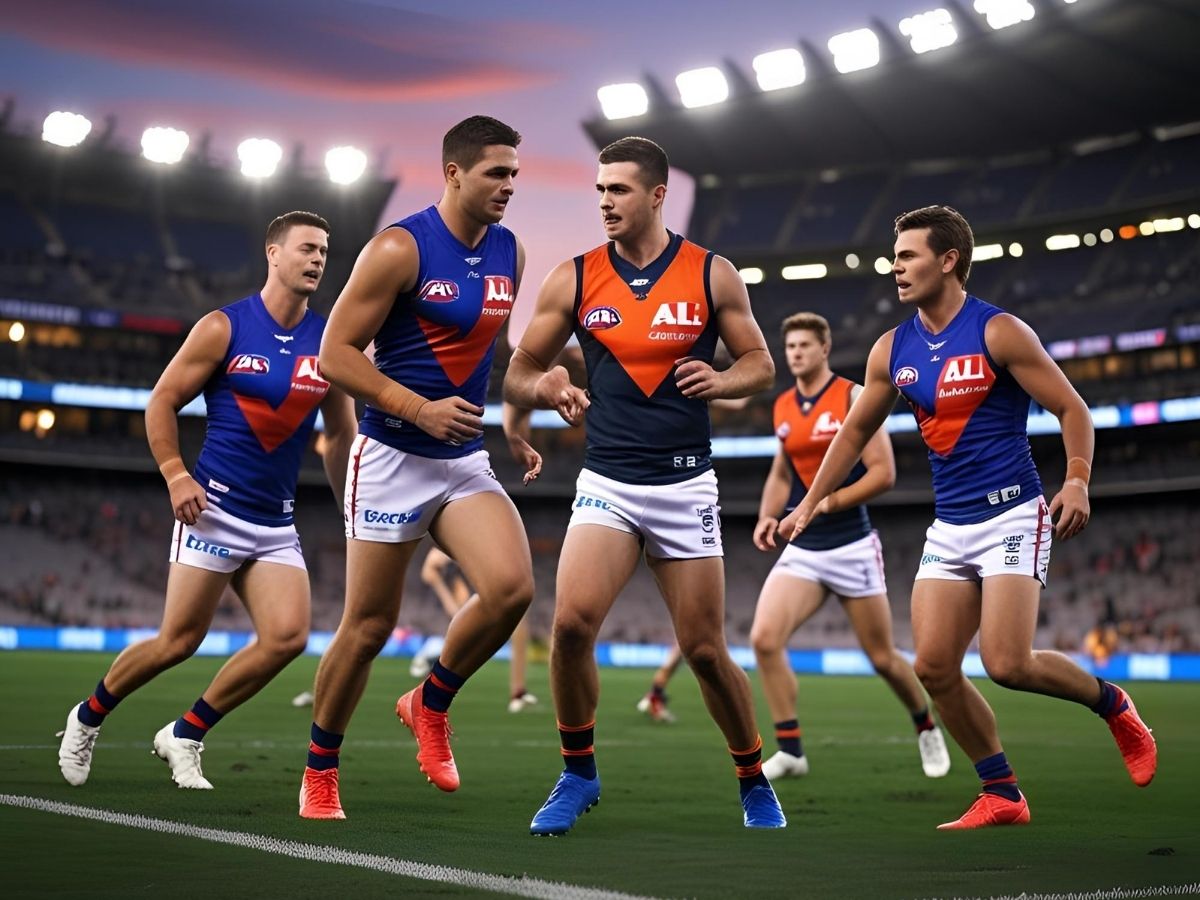
The 2025 AFL trade period is shaping up to be one of the most electrifying in recent memory. Top clubs are not just looking to tweak their rosters; they’re making bold moves to seize premiership glory in an era where the competition is more intense than ever. From Victoria’s high-profile stars seeking new homes to clubs strategizing on balancing youth and experience, the upcoming trade window promises drama, surprises, and game-changing transfers. As the free agency period has kicked off and the trade talks intensify, fans and commentators alike are keeping a close eye on who might be the pivotal figures shaking up the AFL landscape for the 2026 season.
In Brief:
- Several star players from Victorian clubs are at the center of high-stakes trade discussions.
- Adelaide and Brisbane are making strategic moves, with veterans departing and sought-after talents arriving.
- Carlton faces a tumultuous off-season after key free agency losses, looking to rebuild depth and versatility.
- Collingwood confronts the potential loss of experienced forwards amid a transition phase.
- Emerging talents and veteran stalwarts alike will be focal points for club strategies across the league.
- Overview of key player departures and acquisitions during the 2025 trade period
- Detailed analysis on clubs with the most influential activity expected
- Insights into free agent moves shaping the AFL landscape
- Review of tactical impacts on teams following player movement
- Exploration of rising stars and veterans making critical decisions
Major Player Movements and Trade Candidates to Watch in 2025
The 2025 trade period has players from nearly every club in the spotlight, either as potential departures or coveted recruits. Among the most talked-about names are veteran stars and exciting young talents, many out of contract or on the cusp of their career-defining moves.
A key trend this season is the number of retired veterans leaving space for fresh talent. Adelaide’s significant roster changes after a disappointing September exit underline this shift. Veterans like Brodie Smith and Matt Crouch have retired, impacting Adelaide’s midfield and defensive structures. The club has also parted ways with players such as Lachie Murphy and Harry Schoenberg, amplifying the urgency to find dynamic replacements. Adelaide’s pursuit of marquee players Christian Petracca and Callum Ah Chee signals their aggressive drive to return to finals contention (adelaide-crows-rebuild-2025).
Brisbane’s championship success influences its trade behavior significantly. While they have retained a strong core, several players like restricted free agent Brandon Starcevich and Callum Ah Chee are weighing options, with Adelaide boldly linked to Ah Chee’s potential transfer. The arrival of free agent Oscar Allen promises to strengthen the Lions’ front line, effectively filling key roles vacated by Derek Daniher’s absence (brisbane-lions-premiership).
Carlton’s offseason narrative is dominated by the free agency departures of Tom De Koning and Jack Silvagni to St Kilda, alongside uncertainty surrounding the future of star forward Charlie Curnow. The Blues might be forced into a tough rebuild, eyeing players like Sam Flanders and Campbell Chesser to bring resilience and fresh energy. This off-season for Carlton is a test of their list management acumen and adaptability (players-cut-in-2025-where-will-they-land-next-season).
- Key outgoing players include retired and delisted veterans across multiple clubs.
- Club strategies are focusing on harnessing free agency and trade opportunities to address specific positional needs.
- Player movement is dominated by Victorian clubs, with intense competition for big-name stars like Petracca and Curnow.
- Emerging players are also being targeted for long-term list building.
- Trade period length (October 3-15) allows for a high volume of negotiations and deals.
| Club | Notable Departures | Potential Arrivals | Key Focus |
|---|---|---|---|
| Adelaide Crows | Brodie Smith (ret), Matt Crouch (ret), Lachie Murphy, Harry Schoenberg | Christian Petracca, Callum Ah Chee, George Stevens | Rebuilding with star recruits and youth |
| Brisbane Lions | Brandon Starcevich?, Callum Ah Chee? | Oscar Allen (free agent), Sam Draper | Bolstering premiership-calibre depth |
| Carlton | Tom De Koning, Jack Silvagni (both free agency) | Sam Flanders, Campbell Chesser | Reversing offseason losses, building depth |
| Collingwood | Brody Mihocek?, Jamie Elliott?, Tom Mitchell?, Mason Cox? | Jack Buller?, Key defender targets | Managing veteran departures amid premiership window |
Free Agency Impact and Contract Dynamics Changing AFL Team Landscapes
The free agency window opening on October 3 is acting as a catalyst for trades, shifts, and surprises that will define club fortunes well into the next season. The frequency of in-contract stars seeking new challenges is unprecedented, ratcheting up pressure on clubs to innovate with their recruitment strategies.
Essendon is experiencing a particularly turbulent period. Captain Zach Merrett’s desire to leave for Hawthorn has thrown the Bombers’ stability into question. Alongside unrestricted free agent Sam Draper’s move to Brisbane, these high-profile departures highlight the shifting allegiances and aspirations in the player market. Meanwhile, talented players like Will Setterfield and Ben Hobbs await contract resolution, adding to the uncertainty (afl-trade-rumours).
St Kilda has been aggressively capitalizing on free agency by landing the likes of Tom De Koning and Jack Silvagni from Carlton, signaling a bold intent to accelerate their premiership pursuit. Personality-driven acquisitions and strategic targeting of in-contract players paint an evolving landscape where clubs prioritize culture and versatility (october-afl-trade-storylines).
- Free agency enables players to explore options, forcing clubs to balance retention and recruitment.
- High-profile free agent signings impact club dynamics instantaneously.
- Restricted free agency rules add layers of complexity to negotiations.
- Clubs must juggle salary cap management with aggressive recruitment needs.
- Player ambitions are increasingly fluid, influencing market activity beyond contract expiry.
| Club | Free Agency Moves | Contract Uncertainties | Strategic Implications |
|---|---|---|---|
| Essendon | Sam Draper (to Brisbane), Zach Merrett (possible to Hawthorn) | Will Setterfield, Ben Hobbs | Rebuilding amid upheaval; managing star exit offers |
| St Kilda | Tom De Koning, Jack Silvagni (both from Carlton) | Max Heath (to Melbourne confirmed) | Boosting premiership push with aggressive recruitment |
| West Coast Eagles | Oscar Allen (to Brisbane) | Campbell Chesser (to Carlton) | Renewing list depth; focusing on positional replacements |
Club-by-Club Trade Challenges: Navigating Veteran Departures and Rebuilding
Every club faces its own unique challenges during the 2025 trade period, as large lists of veterans retire or move on to greener pastures. Managing this turnover is pivotal to long-term success.
Fremantle is experiencing a generational turnover with legends Nathan Fyfe and Michael Walters retiring, while younger players such as Will Brodie seek opportunities elsewhere. Meanwhile, GWS Giants maintain list stability with fewer impending departures, but look to bolster their defensive stocks amid firm trade interest in key recruits. These moves demonstrate the broad spectrum of challenges AFL clubs face in roster management (clubs-trade-period-challenges).
Collingwood is confronting a critical juncture; players like Brody Mihocek and Jamie Elliott contemplating exits, while Tom Mitchell and Mason Cox have been encouraged to explore trade options. Such potential veteran losses could disrupt the Pies’ premiership window, forcing hard decisions on recruitment priorities and future planning (collingwood-delists-markov).
- Club veterans retiring or leaving creates opportunities and challenges for incoming players.
- Teams must balance immediate competitiveness versus long-term list shaping.
- Strategic trade decisions often hinge on managing salary cap and player development pipelines.
- Trades can either reinforce premiership aspirations or accelerate rebuilds.
- Each club’s approach reflects its unique position in the AFL cycle.
| Club | Veteran Departures | Rebuilding Strategy | Impact on Team Dynamics |
|---|---|---|---|
| Fremantle Dockers | Nathan Fyfe (ret), Michael Walters (ret), James Aish (ret) | Youth focus with key trades for defensive reinforcement | Lower average age, transition phase |
| Collingwood Magpies | Brody Mihocek?, Jamie Elliott?, Tom Mitchell?, Mason Cox? | Rebuild attacking options, recruit new defenders | Potential gap in forward line threat, urgency to refresh list |
| Hawthorn Hawks | Luke Breust (ret), Sam Frost (delisted) | Targeting star midfields through trades and free agency | Transitioning midfield core; balancing youth and experience |

Rising Stars and Young Talents Poised for Breakthroughs Through Trades
Trade windows are not only about established stars switching guernseys. They present pivotal opportunities for promising young men ready to carve their niche in the AFL. Clubs with a wealth of experienced talent are eyeing fresh legs and fierce determination to inject energy.
Players like George Stevens at Adelaide and Sam Flanders attracting attention from Carlton and St Kilda epitomize this new wave of breakout candidates. Their potential impact can drastically reshape list balances and open pathways for strategic midfield and forward upgrades (rising-star-nominee-spotlight).
Rookie drafts also play a critical role alongside trades, as clubs attempt to ensure they acquire and retain prime young talent for sustained success. The dynamic tension between nurturing talent internally and externally recruiting creates an exciting AFL ecosystem alive with possibility (rookie-draft-preparations).
- Emerging players can redefine club fortunes with fresh perspectives and vigor.
- Strategic trades of young talent reflect clubs’ ambitions balancing patience and progress.
- Player development systems and club cultures directly affect young players’ success.
- Breakout seasons attract trade interest, catalyzing movement across the league.
- Rookie drafts complement trade activity in securing future stars.
| Player | Current Club | Linked New Club | Expected Role |
|---|---|---|---|
| George Stevens | Geelong Cats | Adelaide Crows | Midfield depth and forward utility |
| Sam Flanders | Gold Coast Suns | Carlton/St Kilda | Versatile midfield and wing cover |
| Judd McVee | Melbourne Demons | Fremantle Dockers | Defensive rebounding and pressure acts |
Tactical and Strategic Impact of Player Movements on AFL Clubs in 2025
The 2025 trade period is also a vital moment for clubs to recalibrate their tactical setups and long-term strategies in response to player movements. The arrival or departure of key players has a profound effect on game plans, midfield pressure schemes, and defensive stances.
For example, losing experienced midfielders like Zach Merrett at Essendon would mean reshaping inside pressure tactics and leadership roles on field. Similarly, Adelaide’s attempts to lure Christian Petracca — a player known for his explosive skill, endurance, and creativity — could redefine their attacking thrust and game tempo (tactical-trends-2025-afl).
St Kilda’s acquisition of promising recruits and aggressive free agency plays also position them as tactical contenders, sharpening their forward line pace and defensive steel. Clubs that manage these tactical adjustments with precision stand the best chance of contending deep into 2026 and beyond.
- Player acquisitions influence team formations, roles, and matchup strategies.
- Trade activity impacts depth, enabling rotation strategies critical in high-intensity games.
- Midfield pressure dynamics evolve with new player capabilities and leadership influence.
- Defensive and forward line structures are recalibrated based on player strengths.
- Successful teams optimize balance between experienced stars and emerging talents.
| Club | Key Tactical Changes | Impact of Player Movement | Expected Outcome |
|---|---|---|---|
| Essendon | Rework midfield pressure after Merrett exit | Leadership void and pressure scheme recalibration | Potential rebuilding phase but room for young leaders |
| Adelaide Crows | Integrate explosive midfield talent like Petracca | Increased attacking versatility and pace | Revitalized attack to challenge top teams |
| St Kilda Saints | Boost forward line speed and defensive resilience | Stronger contest and tempo control | Legitimate premiership contenders |


