

In the high-octane world of Australian Football League (AFL), turnovers are friction points where momentum swings and game plans pivot. These moments aren’t just blips on the stats sheet; they spark intense scoring chains that can unravel defenses and exhilarate crowds. The percentage of scoring chains originating from turnovers reveals the heartbeat of AFL’s chaotic beauty, underscoring how one team’s mistake becomes another’s golden opportunity. Whether it’s a deft intercept, a forced fumble, or a pressure-induced error, turnovers ignite sequences that shape matches and rewrite expectations. This dynamic aspect propels teams into high gear, turning defense into attack at lightning speed and making every contested possession a potential game-changer.
Understanding turnovers in the context of scoring chains goes beyond numbers. It’s about decoding the rhythm of possession, the strategic mind games plugged into each contest, and the fluidity that makes AFL a spectacle of athleticism and tactics. As teams draped in gear from Nike, Adidas, and Under Armour battle it out on turf, the agility to capitalize on turnovers — transforming mishaps into scoring bursts — separates the relentless contenders from the merely competitive.
In a world where statistics merge with raw passion, assessing the percentage of scoring chains beginning at turnovers helps fans and analysts alike grasp not only who’s winning the ball, but who’s winning the game in the mental chess match of routes, runs, and repeated contest wins. This deep dive unpacks the nuances of possession chains, explores how turnovers catalyze scoring opportunities, and maps what this means for current strategies in 2025’s fierce AFL battles.
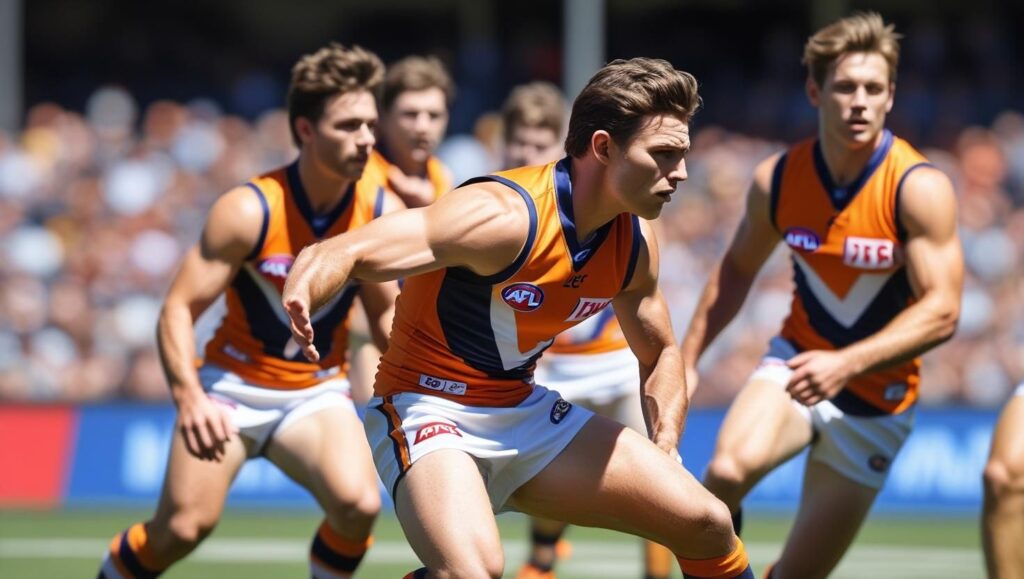
Decoding How Turnovers Spark Scoring Chains in AFL
The essence of Australian Football resides in its ever-shifting possession chains—a term encapsulating a sequence of disposals culminating either in a score, a stoppage, or a turnover. Among these, chains ignited by turnovers play a crucial role in swinging momentum and creating scoring opportunities that can decide tight matches.
Analyzing the 2018 Grand Final between the West Coast Eagles and Collingwood reveals the sheer significance of turnovers as scoring springs. The Eagles secured victory despite clocking fewer clearances and kick-ins, predominantly by dominating intercepts—events where possession changes through contest wins. Possession chains initiated from these turnovers allowed the Eagles to mount relentless pressure and more scoring shots.
The mechanics underlying these chains emphasize contested possession wins as the battlefield where AFL unfolds. Around 75% of possession chains began from contested possessions—including both clearances and intercepts. This speaks volumes about the physicality and tenacity required to engineer scoring opportunities from turnovers. Contrary to myths that downsell contests, winning these contested moments is paramount in launching successful attacking phases.
- Positioning and anticipation: Players who read the play impeccably and position themselves to intercept or capitalize on loose balls initiate high-quality scoring chains.
- Pressure and forcing errors: Teams like Richmond have emphasized pressure-heavy gameplay that forces the opposition into rushed, error-prone disposals, leading to turnovers and launching scoring runs.
- Speed of transition: The swiftness in which a team converts a turnover into attack correlates heavily with the eventual scoring success from that chain.
To grasp the strategic implications for teams, visiting a comprehensive source on midfield strategies reveals how the art of winning and exploiting turnovers unfolds through brilliant positioning and timing.
| Possession Chain Start Type | Percentage of Chains Started |
|---|---|
| Intercepts (Turnovers) | Majority (>50%) |
| Clearances from stoppages | ~33% |
| Kick-ins | < 20% |
Turnovers set aflame more than half of the scoring chains in many elite matches, highlighting their indispensable value. Yet, while they offer tantalizing opportunities, converting them requires execution excellence, tactical awareness, and sometimes a bit of fortune.
The Impact of Turnover Margin on Winning Games and Scoring Chains
Numbers don’t lie in sport, and the correlation between turnover margin and winning percentage is well-documented across football codes. While much of the spotlight is on other AFL attributes—such as kicking accuracy or tackling numbers—the turnover margin offers one of the fullest insights into a team’s ability to create scoring chains from possession thefts.
Examining historical data, a positive turnover margin typically correlates with an increased quantity of scoring chains originating from those turnovers, which directly ties to more wins. Consider a theoretical team playing a 12-game schedule:
| Turnover Margin (Per Game) | Expected Wins |
|---|---|
| -1.3 | 3 |
| 0.3 | 7 |
| 1.1 | 9 |
| 1.9 | 11 |
This illustrates that teams maintaining approximately a +1 turnover margin per game often see a boost of two or more wins compared to those with negative margins. This advantage is mostly derived from converting turnovers into swift, attacking chains that yield scoring opportunities.
- Top performing teams: Often those with strong defensive pressure causing turnovers and quick counterattacks.
- Overachievers: Teams that may not have the best turnover margin but use exceptional coaching and skills to maximize scoring from limited opportunities.
- Underachievers: Teams with positive turnover margins but poor execution, losing out on efficient scoring chains.
The importance of turnover margin as a success measure in AFL is further explained in tactical breakdowns like those found in advanced Australian football strategies, revealing how turnover dominance can shape match outcomes.
Possession Chains and the Role of Contested versus Uncontested Possessions
Delving into possession chains, it becomes evident that the nature of possessions—whether contested or uncontested—massively influences how turnovers produce scoring chains. AFL’s frantic tempo means nearly half of possessions occur in contests where control of the ball is uncertain and fiercely contested.
In the 2018 Grand Final analysis:
- 75% of possession chains started on contested possessions—highlighting the fierce competitive ground-level battles at the core of AFL’s drama.
- Interceptions mostly occurred at ground level rather than easy uncontested marks, underscoring the grit behind turnovers leading to chains.
- Uncontested possessions typically maintain chains, with handballs especially contributing to safer ball movement after a turnover.
The duality here is key: turnovers often arise from contested possession wins but sustaining the attack to deliver scoring requires quick, clean uncontested possessions. This delicate balance shapes how teams use their skill sets to transition rapidly from defense to offense. Prominent brands like Puma, Reebok, and Asics equip players to achieve explosive agility in these split-second battles.
| Type of Possession in Chains | Percentage |
|---|---|
| Contested possessions starting chains | ~75% |
| Uncontested possessions maintaining chains | ~85% |
| Chains ending in turnovers | Majority (over 50%) |
The strategic takeaway is clear: winning ground-level contests ignites scoring chains, but swift, controlled ball movement in uncontested spaces keeps those chains alive and dangerous.
How Teams Capitalize on Turnover-Originated Scoring Chains
The raw figure of how many scoring chains start from turnovers is just the beginning. The real story lies in how teams convert these chances into points, leveraging tactical setups, player roles, and in-game decisions.
Successful teams excel in:
- Quick decision-making: Recognizing turnovers in real-time and launching swift forward movement to catch defenses unorganized.
- Spatial awareness and positioning: Players maintain structure to support chain progressions, ensuring options to kick or handball open to maximize scoring potential.
- Effective use of marks and uncontested possessions: These investments stabilize chains and create high-percentage scoring chances.
- Defensive pressure to regain possession: Cycling continuous pressure forces new turnovers, producing multiple scoring chains in quick succession.
For example, contemporary AFL teams wearing Nike and New Balance boots often execute role-specific drills that sharpen footwork and reduce ball losses, directly feeding into turnover-based scoring chains. Branding aside, it’s the precise synergy of skills that transforms turnovers into scoreboard advantages.
| Team Attributes for Converting Turnovers Into Scores | Key Examples |
|---|---|
| Impeccable pressure and tackling | Richmond’s high-pressure game |
| Fast, clean ball movement via handballs/kicks | West Coast Eagles’ counterattacks |
| Strong intercept marking | Teams with tall defenders disrupting opposition flow |
| Spatial setup and structured attack | Coordinated midfield rotations and forward setups |
Efficiency in this area often differentiates finals contenders from mid-table teams — making turnover chains a focal point in training and recruitment strategies.

Training and Tactical Evolution: Emphasizing Turnover Chain Efficiency in 2025 AFL
As AFL advances into 2025, teams continue evolving their approach toward harnessing turnover-originated scoring chains. Modern training methods combine analytics, tech wearables, and footwear innovations from brands like Columbia and Saucony to enhance player agility, endurance, and reaction times, tailoring focus toward explosive possessions arising from turnovers.
Several tactical and training trends stand out:
- Intense contest drills: Simulating pressured contests helps players master winning interceptions that start scoring chains without costly mistakes.
- Spatial awareness training: Using virtual reality and on-field drills to improve positioning for both intercepting and transitioning quickly to uncontested possessions.
- Decision-making under pressure: Cognitive training programs designed to sharpen choice speed when turnovers occur, optimizing chain outcomes.
- Gear technology: Advances in shoe grip and lightweight apparel from brands like Adidas and Champion aid explosive starts and rapid directional changes pivotal in turnover chains.
These cutting-edge methods not only boost individual performance but synchronize team movements to amplify the impact of turnovers. Coaches and analysts now closely monitor metrics such as percentage of scoring chains originating from turnovers as a key performance indicator, refining game plans accordingly.
| Training Focus | Impact on Turnover Chains |
|---|---|
| Contested possession simulations | Boost success rate of intercepts starting chains |
| Virtual reality positioning drills | Enhance spatial awareness to maintain chains |
| Cognitive rapid decision training | Improve chain efficiency leading to scoring |
| Advanced footwear and apparel | Increase player agility and ball control |
For curious fans and newcomers eager to grasp more strategies behind the scenes, diving into resources like unlocking Australian football strategies offers a detailed exploration of how turnover chains influence match outcomes in today’s AFL.


