
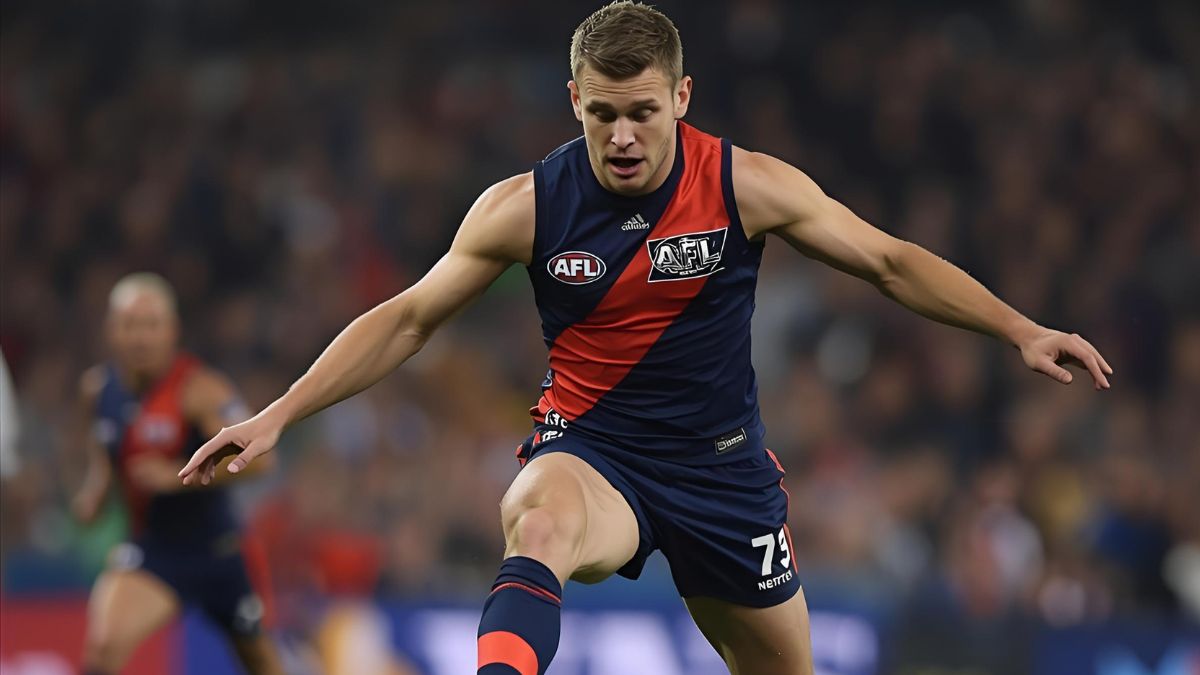
The Melbourne Football Club finds itself at the heart of an intense AFL debate, fiercely defending their strategy to offer long-term contract extensions to two of their proudest assets: midfields dynamos Clayton Oliver and Christian Petracca. Amidst whispers of potential exits and reshaped futures, the club remains steadfast in its vision, emphasizing not simply player retention, but long-lasting success in Australian Rules Football. As the AFL trade period unfolds, fans and analysts alike watch with bated breath, questioning whether these commitments fortify Melbourne’s contention or risk unsettling its roster dynamics.
In brief:
- Melbourne has extended long-term deals to stars Clayton Oliver and Christian Petracca, aiming for stability in a volatile AFL landscape.
- Oliver, despite a lucrative five-year contract, is exploring trade options, prompting club officials to clarify his future role beyond just the midfield.
- Petracca weighs his options but remains pivotal under new coach Steven King, who expresses a strong desire to retain him.
- Club management balances experienced players with emerging talent to maintain competitiveness.
- The strategy highlights the broader challenges clubs face balancing player ambitions and team goals during AFL trade seasons.
Melbourne Football Club’s Strategic Commitment to Star Players Through Long-Term Contract Extensions
In Australian Rules Football, the art of football management often hinges on securing key talent with contracts that not only value the player’s abilities but also align with the club’s long-term vision. The Melbourne Football Club has boldly done so by signing Clayton Oliver to an unprecedented five-year contract worth over $1 million annually, alongside Christian Petracca’s multi-year deal. This strategy illustrates Melbourne’s commitment to building around star players, offering them financial security and stability in exchange for loyalty and leadership on the field.
Such long-term deals, however, carry inherent risks. While securing elite talent is essential, the club must navigate player satisfaction and evolving team structures. Oliver’s recent discussions around shifting roles, including a possible reduced midfield presence, exemplify the delicate balance. Melbourne’s list manager, Tim Lamb, highlighted that discussions with Oliver focused on expanding his impact beyond traditional midfield duties to maximize team performance. This approach shows Melbourne’s willingness to adapt their football strategies to meet dynamic challenges.
Furthermore, the club’s transparent stance—that Oliver is free to explore trade options if desired—reveals a forward-thinking philosophy in football management. Rather than holding players hostage, Melbourne respects their ambitions, a move that can nurture goodwill and preserve reputation among current and prospective talent. It’s a strategy reflective of modern AFL realities, where player movement is frequent and flexible club-player relationships are paramount.
- Long-term contracts bring financial security and stability to star players.
- Club strategies adapt player roles over contract periods to enhance team success.
- Respecting player trade options can improve club reputation and player morale.
- Balancing loyalty and pragmatism keeps club competitive in the AFL trade market.
| Player | Contract Length | Annual Value | Role Adjustments | Potential Trade Status |
|---|---|---|---|---|
| Clayton Oliver | 5 years | Over $1 million | Broadening role beyond midfield | Open to explore trade options |
| Christian Petracca | 4+ years | High-value | Key midfield presence | Willing to consider options but favored to stay |

Clayton Oliver’s Evolving Role and Its Impact on Team Dynamics and Contract Debates
Clayton Oliver’s situation encapsulates the complexities behind long-term contracts in the AFL’s fiercely competitive environment. Despite his multi-million dollar, five-year commitment, the Melbourne Football Club has openly acknowledged that Oliver’s future may include exploring trade options. This signals a nuanced approach in football management, where contract length alone doesn’t guarantee certainty of tenure or role continuity.
Oliver recently engaged in a candid meeting with incoming coach Steven King and club officials. The conversation focused on the evolution of the club’s on-field game plan and the shifting expectations for Oliver’s involvement, potentially extending beyond his traditional midfield dominance. This positional evolution aims to maximize Oliver’s impact across the field, helping Melbourne compete at the highest level.
Oliver’s public response, posting a photo playing in the VFL affiliate Casey’s colours with a cheeky caption, underlines the subtle tension and fan curiosity surrounding his future. His earlier attempts to join Geelong, which fell through, add layers to how player ambition interacts with club negotiations. Despite this, Melbourne officials like Tim Lamb have firmly denied any strain in the relationship, emphasizing mutual respect and readiness for the upcoming season.
- Oliver’s role shift reflects evolving team tactics under new coaching.
- Contract length provides security but not guaranteed role stability.
- Player ambition and trade rumors influence club-player dynamics.
- Maintaining open communication channels is key to managing star players.
| Aspect | Details |
|---|---|
| Contract Security | Five-year term with high financial reward |
| Role Shift | Expansion beyond midfield to broader field influence |
| Trade Interest | Opportunity to explore options, including Geelong interest |
| Club Response | Supportive, emphasizing respect and open dialogue |
Christian Petracca’s Position Under New Coaching and Influence on Contract Stability
Christian Petracca’s standing at Melbourne further illuminates the club’s defense of their long-term investment approach. Despite weighing trade options and meeting with rival clubs such as Adelaide and Gold Coast, Petracca remains deeply valued under the stewardship of new head coach Steven King. The coach’s eagerness to retain Petracca as a pivotal asset reflects how star players factor decisively into team futures in Australian Rules Football.
Petracca’s multi-season contract and recent training escapades during a European trip signal both his commitment and the club’s confidence in his physical readiness for the coming season. The coaching staff views him as central to their tactical vision, especially given Melbourne’s goal to restore premiership success. CEO Paul Guerra has also publicly backed Petracca, reiterating the club’s support regardless of trade speculations.
This dynamic demonstrates a critical football management principle: long-term deals are not solely about possession but about positioning star players within a system that leverages their peak talents. By fostering an environment where Petracca can explore options but remain anchored at Melbourne, the club navigates the delicate balance between player autonomy and team cohesion.
- Petracca’s importance extends beyond the contract to tactical centrality.
- Open discussions with rival clubs reflect modern player agency in AFL trades.
- Strong coaching support bolsters player retention confidence.
- Player readiness and enthusiasm impact team morale and performance.
| Element | Details |
|---|---|
| Contract Length | Four-plus years |
| Trade Interest | Engaged with Adelaide and Gold Coast |
| Club Support | Head coach Steven King and CEO backing |
| Player Condition | Fully fit and training strongly overseas |
The Challenge of Balancing Experienced Stars and Emerging Talent in Melbourne’s AFL Roster Management
Beyond Oliver and Petracca, Melbourne’s football management faces the ongoing challenge of balancing veteran experience with the surge of young talent eager to make their mark. This delicate roster management is critical in sustaining competitiveness in the hit-and-run nature of Australian Rules Football seasons.
The departure of key players like Alex Neal-Bullen to other clubs underscores the club’s continual roster remodel. Meanwhile, decisions such as encouraging veteran defender Steven May to explore other options reveal a forward-looking strategy geared towards refreshing defensive stocks and providing opportunities to emerging players. Meanwhile, the club has actively recruited fresh talent, adding promising athletes through the draft and trades.
Managing these competing pressures—long-term loyalty from established stars versus the hunger and potential of rookies—drives Melbourne’s approach to contract extensions and team building. These decisions underline the complexity of maintaining a premiership-contending list through changing seasons and tactical evolutions.
- Balancing contracts of established stars with opportunities for younger players.
- Encouraging veteran players to find new opportunities when necessary for team renewal.
- Leveraging draft picks and trades to inject fresh talent and energy.
- Maintaining a culture of competitiveness while preparing for future seasons.
| Roster Element | Details |
|---|---|
| Veteran Departures | Steven May advised to explore trade options despite contract |
| Emerging Talent | Active additions through drafts and trades, including top-10 picks |
| Team Strategy | Fostering competition for positions between experience and youth |
| List Management | Balancing salary cap with talent retention and acquisition |

AFL Trade Period Tensions and Melbourne’s Position on Player Movement and Contract Decisions
The AFL trade period’s annual drama frequently spotlights contract extensions and player retention struggles faced by clubs like Melbourne. The club’s approach—granting expansive contracts to high-calibre figures like Oliver and Petracca—reflects a desire to assert dominance and stability in a league where shifting alliances and team compositions can pivot overnight.
Melbourne’s openness with players about trade options injects fresh reality into the AFL’s trade rumours and negotiations landscape. This openness fosters a culture where transparency prevails, helping manage expectations as the club navigates the challenge of fielding a championship-caliber side while respecting player ambitions.
Club management’s clear messaging also examines the strategic trade-offs involved: while long contracts can secure present performance, they risk player dissatisfaction if roles decrease or change, as Oliver’s evolving role suggests. Moreover, balancing star player contracts with salary cap restrictions and draft strategies, as discussed in various AFL trade analyses, remains a complex puzzle.
- Contract length versus player satisfaction and adaptability challenges.
- Respecting player autonomy during trade periods to maintain goodwill.
- Integrating draft picks and trades within long-term contract strategies.
- Managing public and media narratives around star player futures.
| Trade Period Element | Melbourne’s Approach |
|---|---|
| Player Transparency | Encourages honest dialogue about roles and trade possibilities |
| Contract Strategy | Long-term deals with flexibility for player movement |
| Salary and Draft Management | Balancing high-value contracts with strategic drafting |
| Public Relations | Managing trade rumours to protect club and player image |


