

97.7% of NFL players who died between 2016 and 2021 could have had chronic traumatic encephalopathy, according to a new study that places the possible prevalence of the degenerative brain disease far above prior community-based findings.
Researchers examined 878 former NFL players who died during the six-year period. Of that group, 235 donated their brains for research and 215 were found to have CTE, a disease that can only be diagnosed after death. The study, published in the British Medical Journal, calculated a conservative minimum CTE prevalence of 24.5% among all former players who died in the period, while its maximum estimate reached 97.7%.
| Study measure | Figure | Role in the estimate |
|---|---|---|
| Former NFL players who died, 2016 to 2021 | 878 | Total population examined |
| Brains donated to research | 235 | Cases with posthumous examination |
| Donors found to have CTE | 215 | Confirmed CTE cases among donors |
| Conservative minimum prevalence | 24.5% | Estimate across all deaths |
| Maximum prevalence estimate | 97.7% | Upper-end estimate across all deaths |
Only a portion of the players who died had donated brains, yet CTE was found in 215 of the 235 examined. That numerical spread underscores the study’s central challenge. Researchers also found dementia was common among brain donors, adding another outcome measure to a study built around the consequences of repeated head impacts rather than a single diagnosed concussion.
The exposure map extends below the professional game
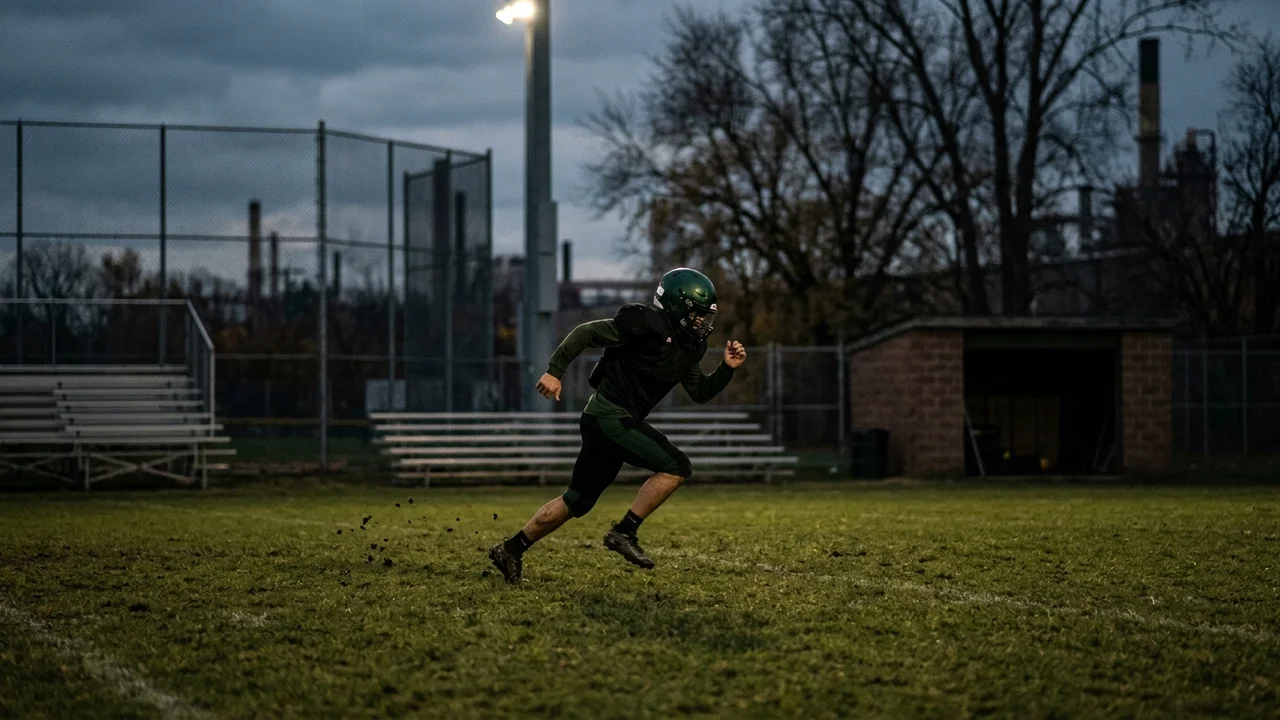
Lead author Daniel Daneshvar, an associate professor at Harvard Medical School, said the evidence points to a broader football exposure pattern than one confined to NFL practices and games. “We and others have shown that in NFL players, specifically, there is about a four times higher rate of death from neurodegenerative disease than the general population,” Daneshvar said.
The report does not treat the positional and contact burden within a player’s career as beginning at the NFL entry point. According to Daneshvar, the bulk of the head impacts experienced by these former players did not occur at the NFL level, but at college, high school and, in many cases, youth football. That framing puts the emphasis on accumulated repetitions, with impacts layered through multiple levels of the sport before a player reaches the professional game.
“All of those cumulative hits to the head added up to result in an increased risk,” Daneshvar said.
Prevention pressure lands squarely on the sport’s developmental structure. The study links the possible prevalence at death to a long chain of repeated impacts, not just those sustained in the pros. Researchers urged the NFL to take prevention measures aimed at reducing repetitive head impacts at every level of the sport.
NFL cites existing safety strategies and player resources
The NFL has already altered one part of its contact-practice structure. Its 2011 Collective Bargaining Agreement limited the number of contact practices, a rule change that addressed how much full-contact work could be built into the professional schedule.
A $1 billion settlement in 2016 with more than 5,000 former players followed a long-running class action. CTE has become an increasingly prominent issue in American football, while the new study’s estimates sharpen attention on how the total number of hits may accumulate before and during an NFL career.
An NFL spokesperson said the league “continuously strives to make the game of football safer, including by implementing strategies to reduce concussions and head impacts.”
The spokesperson added that the NFL remains committed to providing an expanding set of physical and mental wellbeing resources for the NFL community, and encouraged former players to use those resources if they are concerned about their health.


