
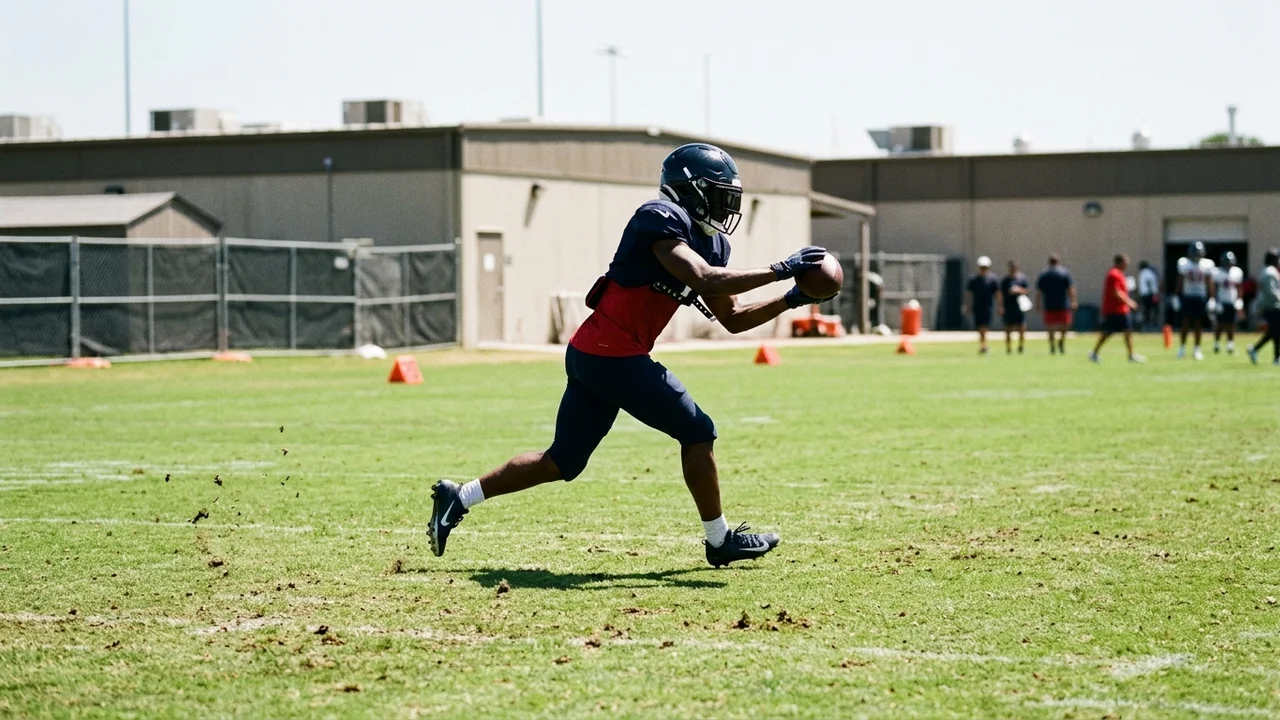
Deep safety acquisitions have often driven the tactical evolution of NFL defenses. The Giants have alternated between investing in versatile veterans and betting on athletic upside, always seeking flexibility in coverage shells and dynamic sub-packages. JT Woods, according to reports, fits this pattern: a player with raw speed and special teams experience, potentially a chess piece for the defensive backfield.
Giants defensive coordinators have long tinkered with personnel groupings to counter the league’s passing trends. Use of three-safety sets has hinged on depth and the ability to disguise coverage. Woods, a 2022 third-round pick by the Chargers, arrives with a profile built more on potential than production. As a rookie, he appeared in 10 games, starting once. He logged 31 defensive snaps and 73 on special teams, finishing with three tackles. His main impact came in the third phase, a detail that matches the Giants’ habit of leveraging depth safeties on coverage units while evaluating their fit in base and sub packages.
What Woods’ profile suggests for Giants’ defensive configurations

Woods’ NFL journey has been anything but straightforward. After leaving the Chargers, he spent time with the Eagles, Bears, Seahawks, Raiders, and Jets. While he hasn’t made a significant defensive mark with any of those teams, the repeated interest from multiple franchises points to his perceived upside, centered on athletic traits and versatility. For the Giants, that could mean a fit in multi-safety looks that morph post-snap.
His arrival opens up several possibilities for the Giants’ formations:
- In nickel and dime packages, Woods’ speed could let him operate as a deep third safety, giving the Giants more flexibility to rotate coverage and disguise intentions before the snap.
- On special teams, his previous usage suggests he could immediately slot in as a gunner or on kick coverage, roles that have often served as a springboard for defensive backs seeking more snaps on defense.
- If the Giants lean into more quarters coverage, Woods’ exposure to multiple systems, however brief, could help him adapt quickly to pattern-matching responsibilities on the back end.
Giants defensive coordinators have shown a preference for safeties with range, especially when facing vertical passing attacks. Woods’ stat line, three tackles and limited defensive action, doesn’t leap off the page, but his spot on the roster signals a willingness to keep experimenting with depth pieces who can contribute on both defense and special teams. Players in this mold have sometimes carved out larger roles as injuries and performance shifts alter the depth chart.
There have been stretches when the Giants inserted athletic specialists as matchup-specific tools. Woods fits that mold: not a starter, but a sub-package player whose speed could be deployed against certain offensive looks, particularly those featuring quickness at the slot or boundary.
Table: JT Woods’ NFL Experience and Usage
| Season | Team | Games Played | Starts | Defensive Snaps | Special Teams Snaps | Tackles |
|---|---|---|---|---|---|---|
| 2022 | Chargers | 10 | 1 | 31 | 73 | 3 |
Woods’ arrival gives the Giants another option for their ever-adaptive secondary schemes. Whether he can move beyond a special teams role and become a true rotational safety will depend on his ability to process complex coverage assignments and contribute when the defense shifts to hybrid looks.
The Giants’ agreement with JT Woods, as reported, underscores the ongoing search for back-end versatility in modern defensive football. Woods’ next snaps will be watched closely by those tracking the Giants’ experiments with formation flexibility and coverage disguise.


